Search
-
State arrears to Nov fell to 5.86 bln but 1.96 bln of new debts created in 2013
 EconomyMacroeconomy
arrears’ payment target of 8 billion to 6.6 billion for 2013.
7% -
The complexities of regaining market access: Could Greece learn from Portugal?
![Photo by Can Esenbel [http://www.mundanepleasure.com/]](resources/toolip/img-thumb/2013/10/16/stocks2_economy_esenbel-medium.jpg "Photo by Can Esenbel [http://www.mundanepleasure.com/]") Agora
Agora8. This represented the lowest level for the benchmark five-year Portuguese note in trading
7% -
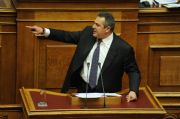
Topsy-turvy ride continues for Independent Greeks, as another MP goes
 PoliticsGreek Politics
a potentially significant role in Greek politics. Polling between roughly 5 and 8 percent in opinion
7% -
Another dive for compensation in Q3 drags disposable income, consumption down
 EconomyMacroeconomy
Greek household disposable income fell by 2.6 billion euros or 8 percent year on year (yoy) in the third quarter of 2013 and reached 30.4 billion, according to the Hellenic Statistical Authority (ELSTAT). The latest data indicates a slightly decelerating decline compared to the second quarter drop
7% -
Deposits up again in December but credit contraction continues apace
 EconomyMacroeconomy
showing a 8 percent (2.6 billion) drop in the third quarter of 2013. This trend will most likely
7% -
Sales season pushes November retail volume to growth for the first time since March 2010
 Economy
and social benefits. The latest figures show an 8 percent drop in gross household income in the third quarter
7% -
Shortcomings in healthcare seen at forefront of austerity impact in Greece
![Photo by Myrto Papadopoulos [www.myrtopapadopoulos.com]](resources/toolip/img-thumb/2014/02/22/yellowballoon_1000_myrto_2202-medium.jpg "Photo by Myrto Papadopoulos [www.myrtopapadopoulos.com]") Society
Societyof major depression, from 3•3 percent in 2008 to 8•2 percent in 2011, with economic hardship being a major
7% -
Greek deposits fell by 1.4 pct in January amid outflows of 2.3 bln
 EconomyMacroeconomy
of household disposable income, with latest official data showing an 8 percent (2.6 billion) drop
7% -
Another party arrives on Greece's increasingly diffuse political scene
 PoliticsGreek Politics
congress on March 8. Greek-German liberal MEP Jorgo Chatzimarkakis also launched his own party, Hellenic
7% -
Bank of Greece publishes bank stress test results, which see capital needs at 6.4 bln
 EconomyMacroeconomy
Tier I capital of 8 percent. The macroeconomic assumptions of the baseline scenario are based on IMF
7%