Search
-
Contraction in Greek credit eases slightly to 3 percent in November
 EconomyMacroeconomy
to 69.59 billion with monthly net deductions dropping to 145 million from more than 200 million
8% -
Polls continue pointing to SYRIZA victory as new post-election scenarios emerge
 PoliticsGreek Politics
of. In fact, if the poll of polls proves accurate SYRIZA would get 145 seats (including the 50-seat bonus
8% -
You've heard the Greek crisis myths, now here are some truths
 Agora
Agora, and subsequently taxpayers, lent to Greece on a cash basis. The remaining 145 billion of loans from the EFSF
8% -
Newsletter 27 - 22/05/2015

of 145 billion from Greek banks. This means that based on the current collateral pool and haircuts
8% -
Greek stocks down by 11.3 pct for biggest weekly fall of last month
 Economy
were the most volatile session of the week. Friday’s turnover of 145 million, also reflecting
8% -
General gov't cash primary surplus to May halves, arrears keep rising
 EconomyMacroeconomy
a primary cash surplus of 145 million in the 5-month period from 231 million last year. In contrast
8% -
General gov't primary cash surplus shrinks in first half of 2015 as state arrears grow
 EconomyMacroeconomy
positive at 145 million, despite almost halving from 288 million last year. On the flipside
8% -
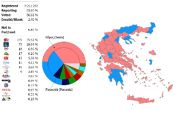
Tsipras confounds expectations, creates new doubts by reviving coalition
 PoliticsGreek Politics
is due to get 145 seats and Independent Greeks another 10. In January, the same two parties had a total
8% -
Deposit outflows for second straight month in February, at 548 mln
 EconomyMacroeconomy
and 35 million partly offset by other euro area residents outflows of 145 million. General
8% -
Some basic products in Greece among most expensive in EU
 Society
and non-alcoholic beverages in the EU in 2015, at 145 percent of the EU average, followed by Sweden (124
8%