-
 Gone girl, vanishing statecraft
-
 Podccast - The Great Sea Interconnector and its high-voltage politics
-
Podcast - Economic gain, social strain and political pain: Greece’s road to elections
-
 The making and unmaking of "Greek statistics"
-
 A summer tan can’t obscure Greek economic reality
-
Podcast - Has Greece fully recovered from the crisis?
Magdeburg shocks Berlin
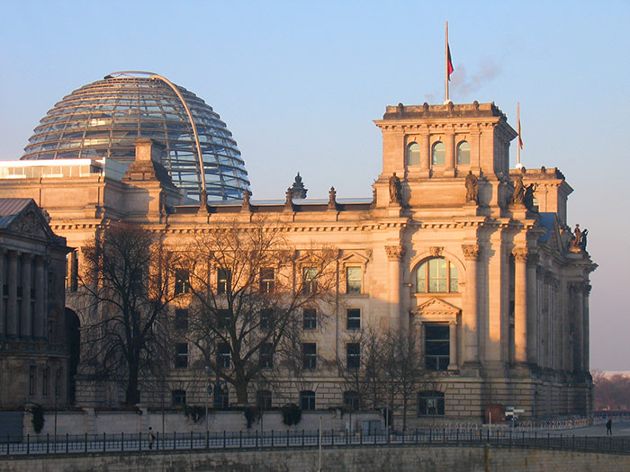
The results of Sunday’s regional elections in the German state of Saxony‑Anhalt should not be seen as a surprise. The victory of the hard‑right Alternative für Deutschland (AfD) and the defeat of the governing Christian Democrats (CDU) had been signalled for weeks.
What shocked party representatives and political commentators was the scale of the AfD’s victory and the extent of the CDU’s collapse. The AfD secured 43.8%, while the CDU fell to 17.2%. The populist right more than doubled its vote share; the conservatives lost almost 20 points.
The AfD’s best‑ever result in any election was driven by record turnout (76%), unprecedented mobilisation of previous non‑voters, and first‑place among first‑time voters. Those casting ballots also attributed higher competence to the AfD on issues such as public safety and economic revival.
Ulrich Siegmund, the AfD’s leader in Saxony‑Anhalt, can claim a triumphant result. Whether he can become the first AfD prime minister of a German regional state remains uncertain. He will need at least three additional votes in the state parliament to secure a majority in Magdeburg, the capital of the East German state.
Several routes could lead to power. The pro‑Russian populist party BSW unexpectedly crossed the five‑percent threshold and entered parliament. Its five MPs have not ruled out providing Siegmund with the votes he needs. Such support would mark a remarkable breach of a political taboo 35 years after German reunification. Horse‑trading is certain to follow.
The AfD may also find defectors among disgruntled CDU MPs, who have lost power and prestige and blame Chancellor Friedrich Merz in Berlin for the catastrophic results in Magdeburg. Siegmund has not ruled out calling new elections if he fails to secure a majority. He clearly feels momentum is on his side.
While the German economy is showing early signs of resilience and recovery, German politics is in dramatic flux. Given his unpopularity, Chancellor Merz barely featured in the Saxony‑Anhalt campaign; the regional CDU preferred he stayed away. The Social Democrats (SPD), Merz’s coalition partners at federal level, considered their small gains — reaching 9.3% — a success; a rather strange interpretation of victory.
There is little time for recrimination. On 20 September, regional elections follow in Berlin and Mecklenburg‑Vorpommern. Further unprecedented success for the AfD, combined with disastrous results for the CDU and SPD, would intensify demands for leadership changes at both regional and federal levels. Political uncertainty and growing polarisation among voters and parties signal despair rather than determination to address Germany’s political malaise.
Today, populism from both left and right is the prime motivating force for many German voters. Whatever their real or imagined grievances, they increasingly use their ballots to punish or reward parties and politicians, while ignoring the potentially grave political and economic consequences. German politics in 2026 is anything but stable or predictable. Fasten your seatbelts for further electoral earthquakes across the German political landscape.
*Jens Bastian is a contributor for Macropolis.