-
 Magdeburg shocks Berlin
-
 A summer tan can’t obscure Greek economic reality
-
 Podcast - Has Greece fully recovered from the crisis?
-
 The World Cup, Argentina and Europe’s quest for moral clarity
-
 Greek firms should embrace ESG and DEI despite US-led policy reversal
-
Podcast - Party time: Greek politics in flux ahead of next elections
The making and unmaking of "Greek statistics"
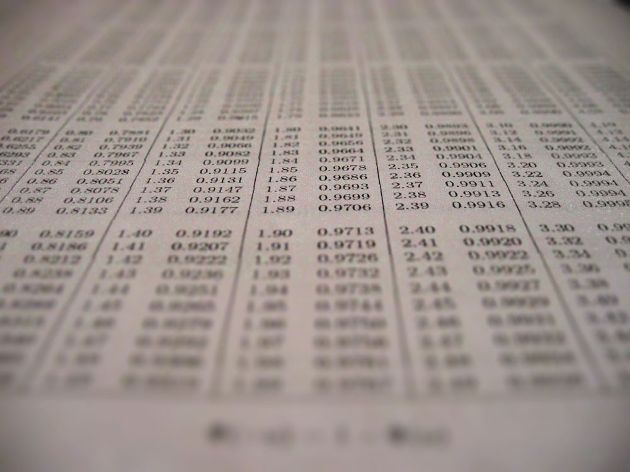
Back in 2010, the term “Greek statistics” became synonymous worldwide with creative fiscal accounting and institutional failure. When Greece faced bankruptcy in late 2009, the international community discovered that the New Democracy government had understated the country’s fiscal deficit.
A few months later, after Greece signed the first adjustment programme in May 2010, the recently elected PASOK government overhauled the statistical framework in an effort to rebuild trust with international creditors and European partners. The Hellenic Statistical Authority (ELSTAT) was established as an independent entity, and in August 2010 Andreas Georgiou — a respected Greek economist with more than two decades at the IMF — was appointed its president.
In November 2010, ELSTAT published revised figures showing that Greece’s 2009 deficit was 15.4% of GDP, not the 6–8% claimed by the previous government. Eurostat repeatedly verified these numbers without reservation.
The accurate calculation of the deficit posed an existential threat to parts of Greece’s political establishment. Accepting the 15.4% figure meant accepting responsibility for fiscal mismanagement. To deflect blame, politicians across the spectrum united around a narrative that the crisis was not caused by years of systemic domestic failure, but by a rogue statistician who had “inflated” the deficit to hand over Greek sovereignty to foreign creditors.
Political and media campaign
New Democracy played a central role in originating and sustaining the offensive against Georgiou. The premiership of Kostas Karamanlis (2004–2009) had presided over the explosion of Greece’s fiscal deficit, and fully accepting the revised figure meant assigning historical responsibility for Greece’s bankruptcy directly to his administration.
When Antonis Samaras became ND leader in late 2009 — and later Prime Minister from 2012 to 2015 — he made opposition to ELSTAT’s revised numbers a cornerstone of the party’s stance. ND spread accusations in Parliament that Georgiou had artificially inflated the deficit, shielding the previous conservative administration from responsibility for the unfolding economic collapse. Even after signing Greece’s second bailout, the party refused to retract the conspiracy theories it had promoted.
Key ND figures and allies actively cultivated the “inflated deficit” narrative, defending the Karamanlis government’s record and attacking the legitimacy of the revised figures. ND lawmakers repeatedly used parliamentary privilege to denounce Georgiou as an “agent” of the IMF. A New Democracy appointee on ELSTAT’s original board publicly accused him of inflating the deficit on instructions from foreign bodies — triggering the initial criminal investigations in September 2011.
When Kyriakos Mitsotakis took over ND’s leadership in 2016, the party remained split. While he sought a modern, pro‑reform image, he had to navigate the powerful Karamanlis faction, which resisted any acknowledgement that Georgiou had been right.
SYRIZA, despite being ND’s bitter rival, adopted the same narrative when it came to power in 2015. The “inflated deficit” theory allowed SYRIZA to frame the bailouts as illegitimate products of fraudulent calculations rather than necessary interventions following state bankruptcy. Much of Georgiou’s legal ordeal unfolded during SYRIZA’s tenure.
The political assault was amplified by a compliant media landscape. Conservative‑leaning outlets transformed a complex statistical recalculation into a sensationalist story of national treason. Georgiou was portrayed as an unpatriotic technocrat sent to “enslave” Greece with foreign debt. ND‑friendly journalists gave front‑page coverage to every new charge or investigation, while Eurostat validations or judicial acquittals were downplayed or framed with suspicion.
This media campaign poisoned public perception and placed immense pressure on the judiciary, making it politically costly for courts to drop the charges.
A 15‑year legal ordeal
The global statistical community viewed Georgiou’s prosecution with disbelief. International associations, respected figures and Nobel laureates issued repeated statements of support, warning that prosecuting a chief statistician for adhering to international standards set a dangerous precedent.
Criminal investigations began in September 2011. Over the next decade and a half, Georgiou faced repeated charges of treason and felony falsification for “inflating” the deficit. Judicial panels cleared him multiple times due to lack of evidence, but senior prosecutors continuously reopened the cases until they were finally dismissed in 2019.
He was also sued for civil slander by a former statistical official after defending ELSTAT’s revised numbers. Greek courts ordered him to pay damages — even though his statements were factually correct — on the grounds that he had harmed the official’s reputation.
The most persistent charge was a misdemeanour “breach of duty”, based on the claim that Georgiou submitted the revised deficit figures to Eurostat without first seeking approval from ELSTAT’s political board. Although acquitted in 2016, prosecutors appealed. In 2017, an appeals court convicted him, imposing a suspended two‑year sentence. When Georgiou appealed to the Supreme Court, his defence asked the court to consult the CJEU on EU rules regarding statistical independence. The Supreme Court dismissed the appeal in 2018 without addressing the request.
Georgiou then turned to the European Court of Human Rights. In March 2023, the ECHR issued a landmark ruling (Georgiou v. Greece), unanimously finding that Greece had violated his right to a fair trial. The court ruled that the Supreme Court’s failure to provide reasoning for refusing to consult the CJEU deprived him of a fair hearing.
Following the ECHR judgment, Greece’s justice system was compelled to reconsider the case. A few weeks ago, the Supreme Court annulled Georgiou’s remaining conviction, concluding that the original law had been fundamentally misinterpreted and misapplied.
After almost 15 years of continuous legal battles, all criminal charges against Andreas Georgiou have been cleared. The corrected deficit numbers he published in 2010 have stood unassailed and repeatedly verified for a decade and a half.
The Georgiou affair stands as a dark legacy of the debt‑crisis years. While the recent decision is a personal vindication for Georgiou, it exposes the reality that for 15 years the state used its judicial system to punish a public servant for fulfilling his duty.