Agora


![Illustration by Manos Symeonakis [http://www.cartoonmovement.com/p/6035]](resources/toolip/img-thumb/2013/12/23/euflagbank_agora_symeonakis-large.jpg "Illustration by Manos Symeonakis [http://www.cartoonmovement.com/p/6035]") Europe missed an opportunity on banking union
Europe missed an opportunity on banking union
In June 2012, at the height of the debt crisis in the eurozone, its leaders decided to create a banking union. Their aim was, as the conclusions of that summit stated, to: “break the vicious circle between banks and sovereigns”. In this case, the sovereigns were members of the single currency whose economies were suffering.
Contributor: Kostas Karkagiannis
Categories: Europe (298), Economy (357)
![Photo by Myrto Papadopoulos [www.myrtopapadopoulos.com]](resources/toolip/img-thumb/2013/12/20/cyprusbar_1000_myrto_2012-large.jpg "Photo by Myrto Papadopoulos [www.myrtopapadopoulos.com]") Why tax evasion threatens to become endemic due to how Cyprus was bailed out
Why tax evasion threatens to become endemic due to how Cyprus was bailed out
One of the most difficult economic concepts for politicians to understand is the idea of dynamic equilibrium. Political economy is based on the idea that it is next to impossible to return to a past condition once expectations are altered.
Contributor: Alexander Apostolides
Categories: Economy (357)
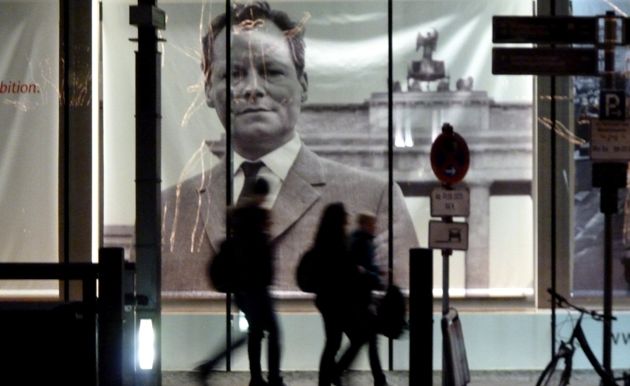 What would Willy do?
One hundred years ago, on 18 December 1913, the former German Chancellor and Nobel Peace Prize Winner Willy Brandt was born in Lübeck. The charismatic leader of the German Social Democratic Party and the Socialist International, who died 1992, has not ceased to inspire politicians and academics around the world with his books, speeches and especially his courageous foreign policy – the new Ostpolitik.
Contributor: Christos Katsioulis
Categories: Europe (298), Politics (420)
![Photo by Myrto Papadopoulos [www.myrtopapadopoulos.com]](resources/toolip/img-thumb/2013/12/11/bankofcyprus_1000_myrto_1112-large.jpg "Photo by Myrto Papadopoulos [www.myrtopapadopoulos.com]") Cyprus in 2014: Looking ahead
Cyprus in 2014: Looking ahead
Cyprus has the habit of grabbing international attention in a global way, only to then be marginalised as a footnote when the immediate crisis seems to have abated. This has been historically true in issues of communal violence and the Annan plan, in what we Cypriots call “the original Cyprus problem”. Sadly for Cyprus, this is also seems to hold true in regards to its financial crisis.
Contributor: Alexander Apostolides
Categories: Politics (420), Economy (357)
 Debt relief or debt restructuring for Greece?
The two economic adjustment programmes for Greece from 2010 and 2012 as well as the sovereign debt restructuring from April 2012 and the debt buyback initiative in December of the same year have had a significant impact on the debt profile of Greece as a sovereign creditor. Greece’s creditor structure in 2013 compared to the point of departure in 2010 hardly bears any resemblance.
Contributor: Jens Bastian
Categories: Europe (298), Economy (357), Greece (537)